4 Months
AIMS Patient Management & Training Platforms
Designing a training platform for busy healthcare professionals.

Platform
Role
Team
Outcomes
Context
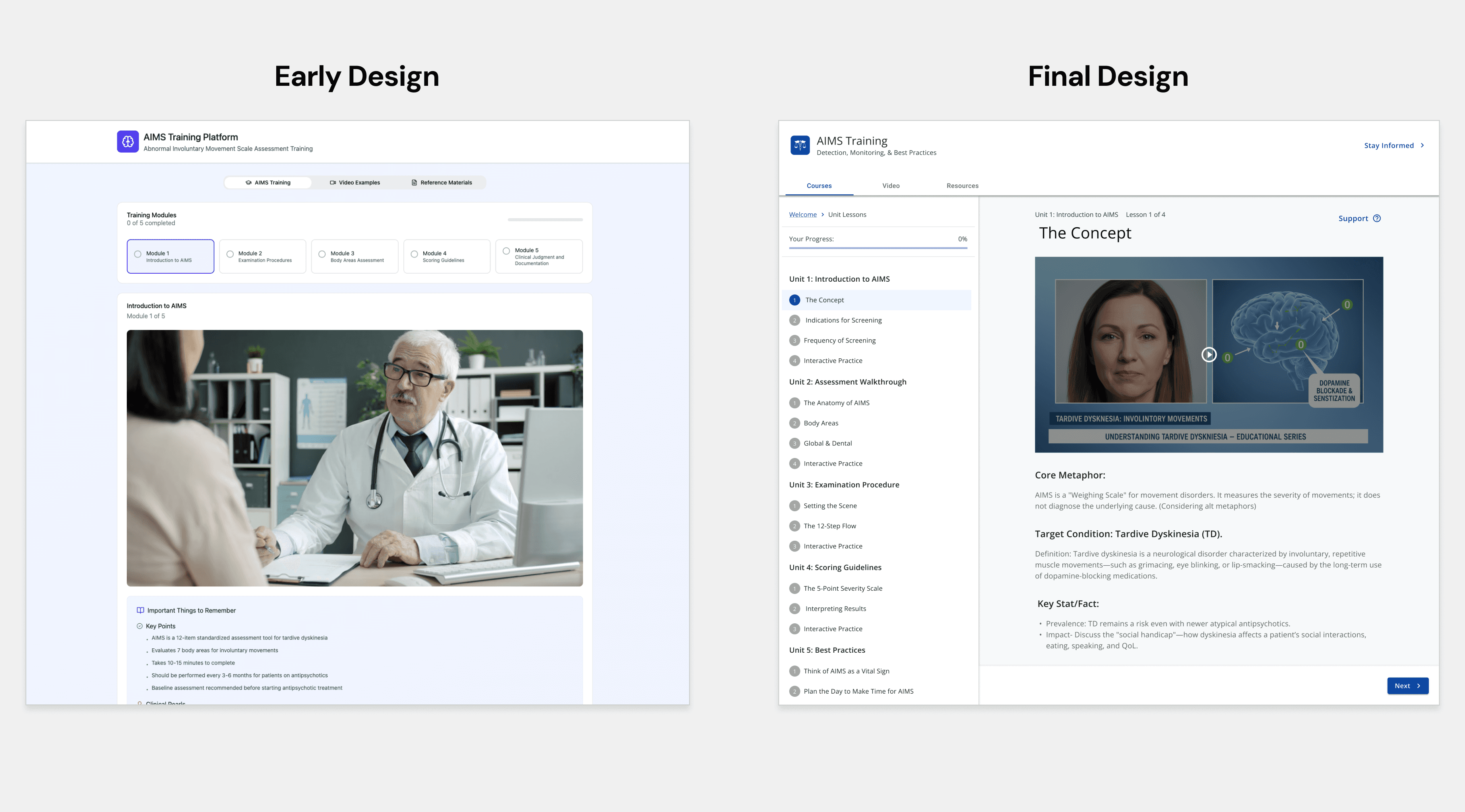
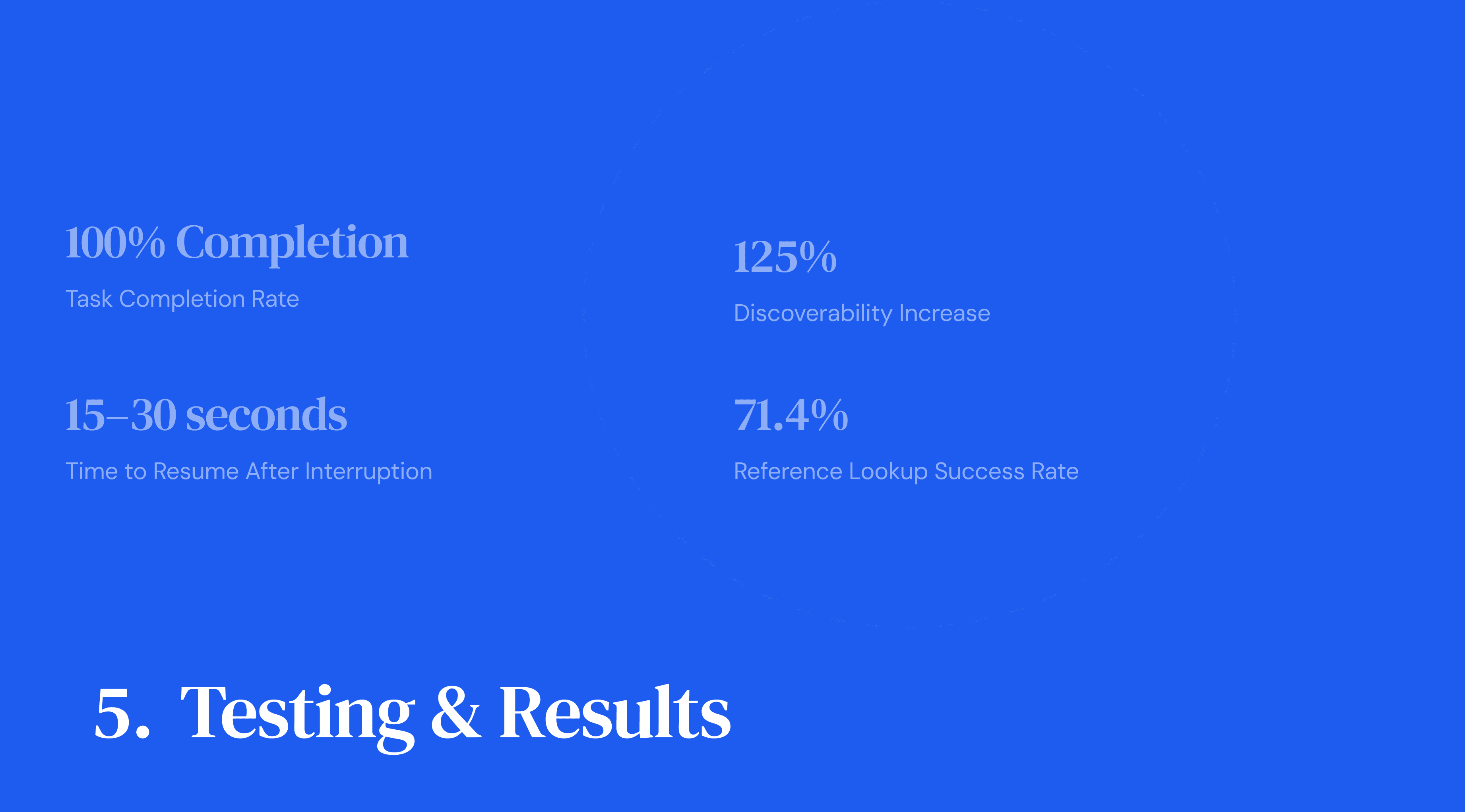
At JMTD Studio, I led the end-to-end design for a clinical training platform. This platform is meant for healthcare providers who monitor patients with an irreversible muscle disorder called Tardive Dyskensia. My responsibilities entailed product design, visual, and UX strategy. I worked cross functionally with 8 engineers, 2 PMS, and my design manager and improved content disoverability by 125%.
Tool Stack:
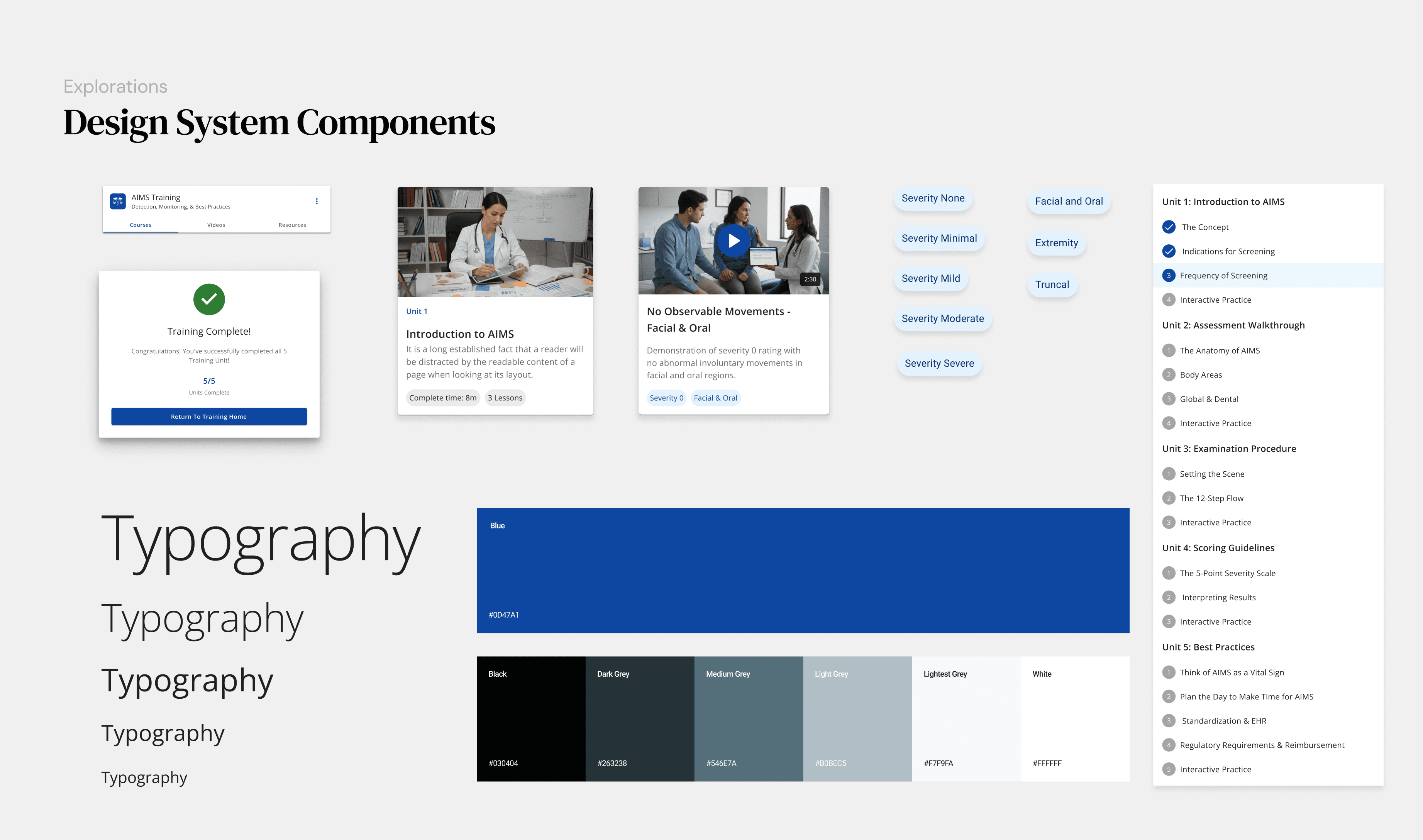
Figma (Prototyping, Wireframing)
Figma Make (Layout exploration)
ChatGPT (Content generation)


Overview
Goal
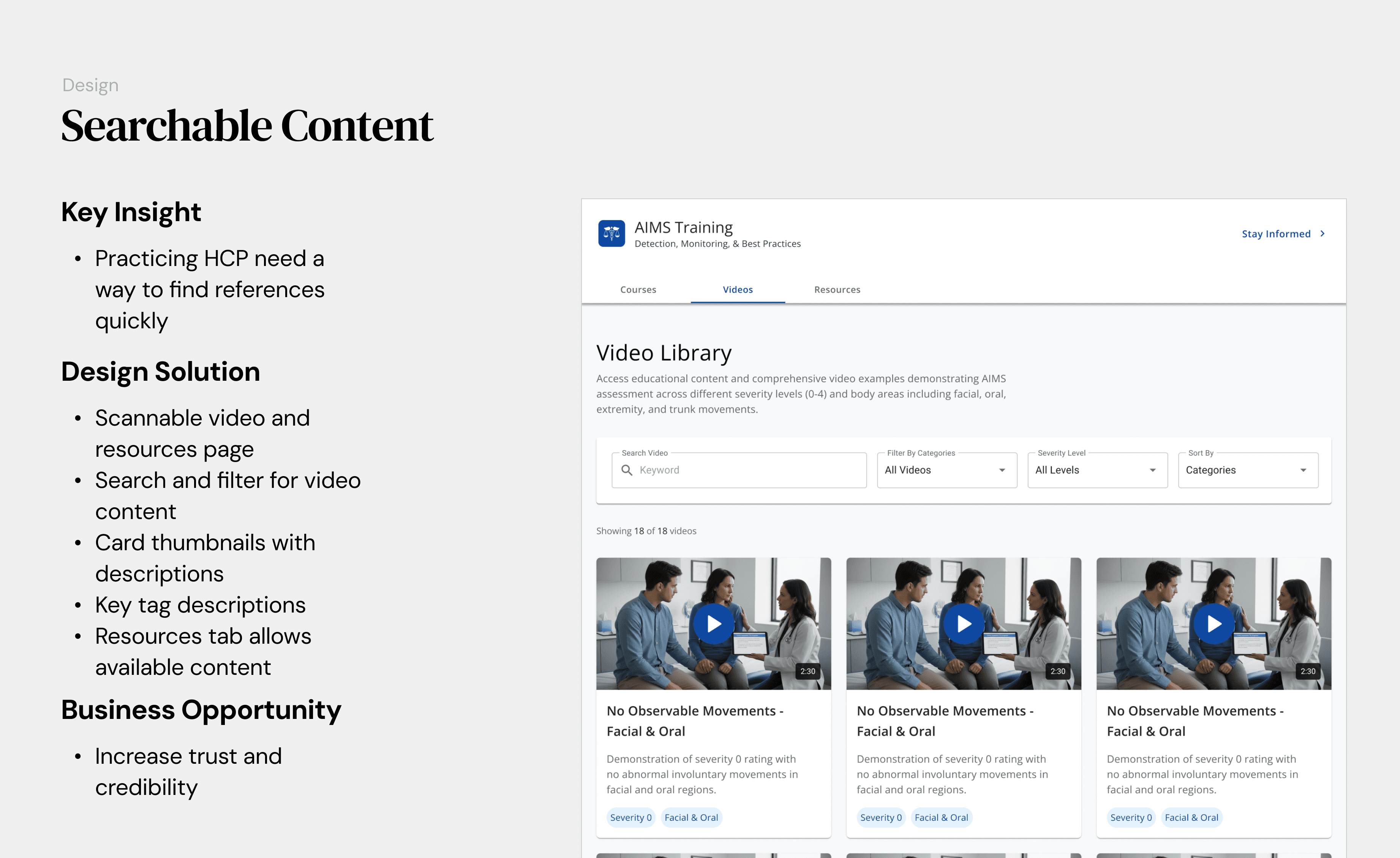
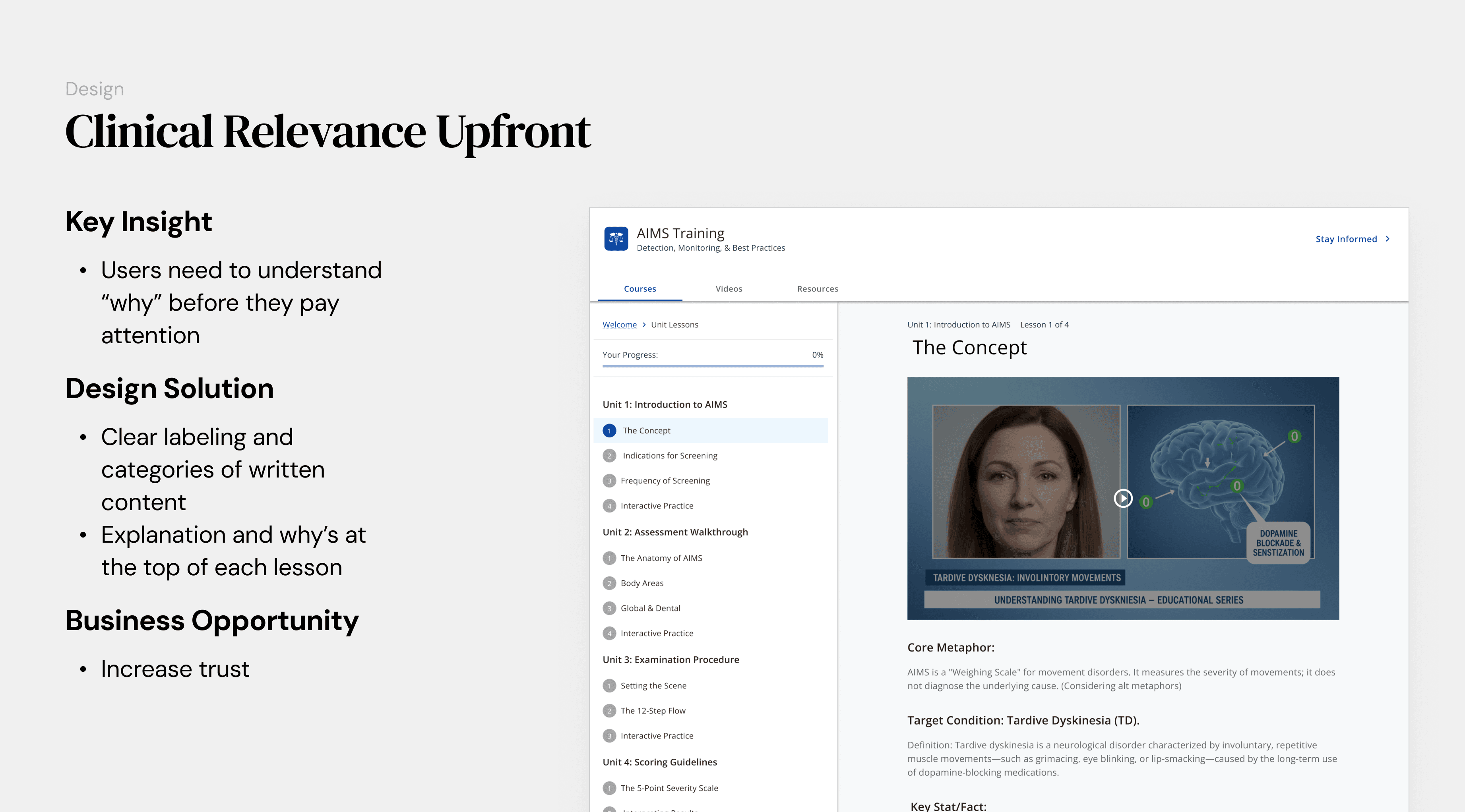
Designing a purpose-built platform creates an opportunity to improve learning efficiency, and reinforce clinical confidence.
Problem
Healthcare professionals do not have a dedicated way to learn about TD.
Design Challenge
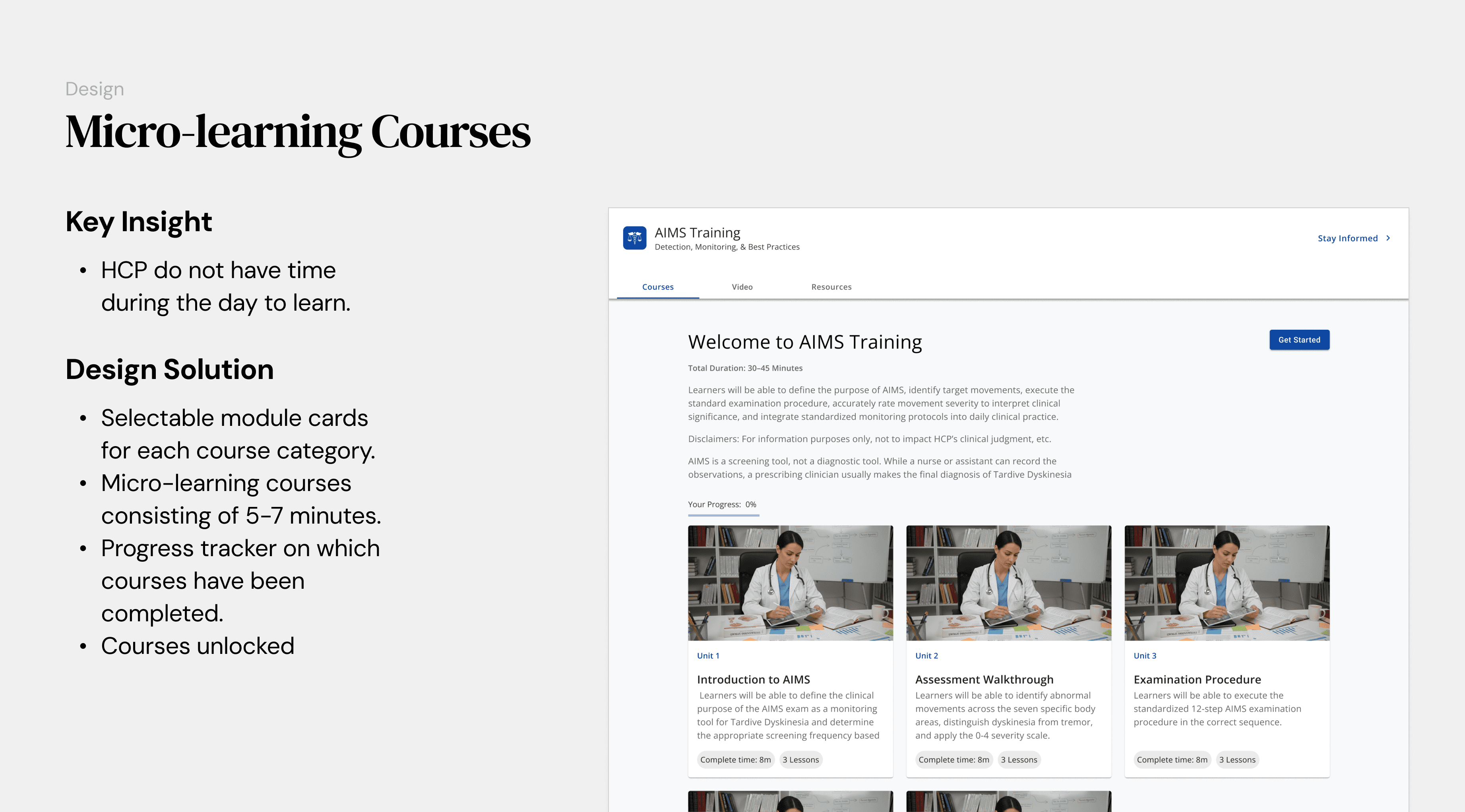
How might we create a content heavy training experience that is easy to browse?
Why This Matters
AIMS Assessment is used to assess Tardive Dyskinesia – is an irreversible muscle disorder caused by taking antipsychotics. Only 20% of HCP who prescribe antipsychotics know how to spot early symptoms. By creating this, our client would be able to establish market authority and set the standard of future AIMS assessments.


Learnings
Start Mapping and Wire framing Early
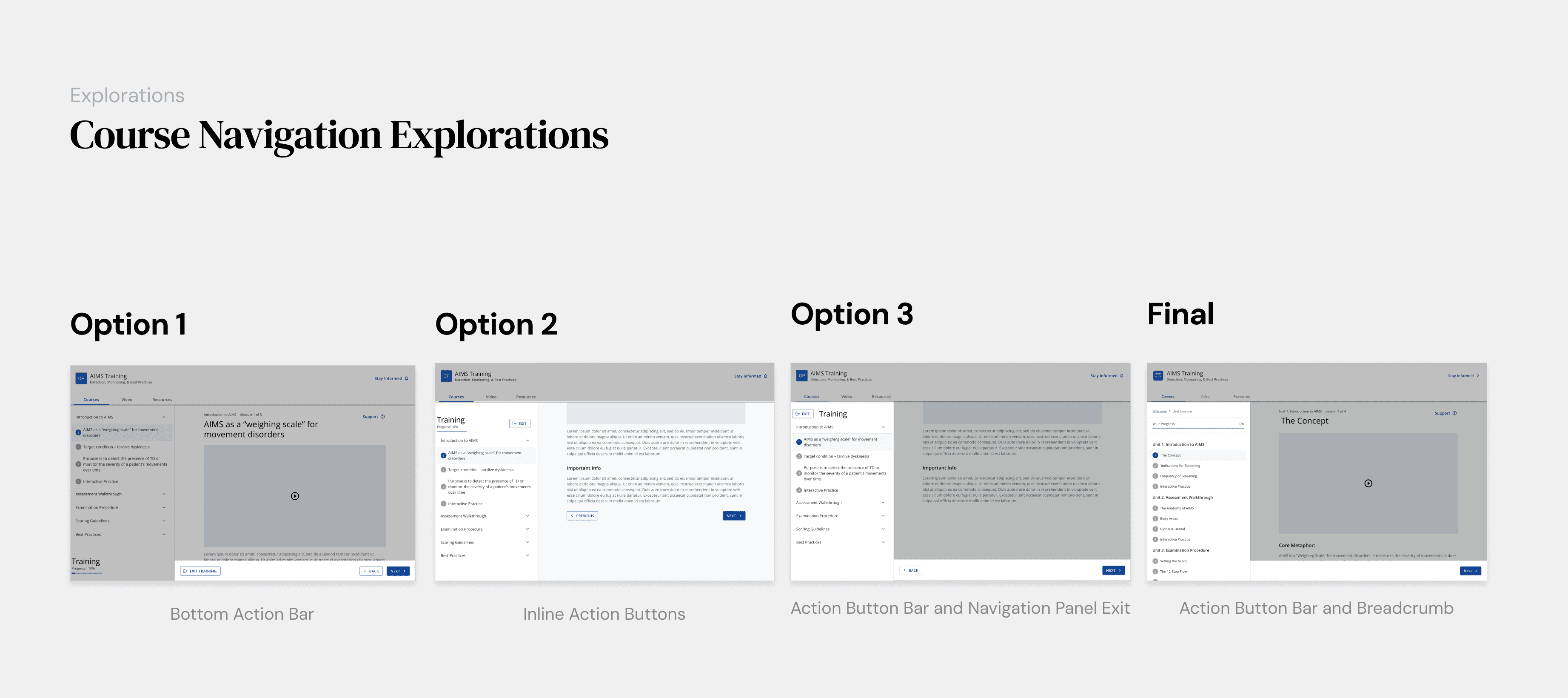
User flow mapping and wire framing helped stakeholder alignment early on in the project and maintained consensus as features changed.
Designing complex systems require simple workflows and single source of truth documentation
As the complexity grew, it led to confusion amongst team members. Simplifying workflows and figma files became key to better alignment.
Collaborate and Share Early During Process
A mistake of mine was assuming that requirements given for the project were already pre-approved by all the stakeholders. I learned that it was important to hold an overview discussion of the project early on to reduce rework.
RELATED PROJECTS

